Complete Guide to Visiting Albania
Everything you need to know before visiting Albania — visa requirements, best time to visit, top destinations, budget tips, transport, safety, and cultural etiquette.
Why Albania Should Be Your Next Destination
Albania is one of Europe's last undiscovered gems — a country with the same crystal-clear waters as Croatia, the ancient ruins of Greece, and the mountain landscapes of Switzerland, all at roughly one-third of the price. With four UNESCO World Heritage Sites (the ancient city of Butrint, the museum cities of Berat and Gjirokastër, and the natural and cultural heritage of Lake Ohrid), Albania offers a depth of history and culture that rivals any Mediterranean destination.
The country enjoys over 300 sunny days per year, making it a near-perfect destination for beach holidays, cultural exploration, and outdoor adventures. Tourism has grown by over 30% annually in recent years, yet Albania remains blissfully uncrowded compared to its neighbors. Whether you're a diaspora Albanian reconnecting with your roots or a first-time visitor, this guide covers everything you need to plan your trip.
Visa & Entry Requirements
Albania has one of the most welcoming visa policies in Europe:
- EU/EEA citizens: No visa required. Enter with a national ID card or passport.
- US, UK, Canada, Australia: Visa-free stays of up to 90 days within a 180-day period. A valid passport is all you need.
- Other nationalities: Check the Albanian e-visa portal at e-visa.al for your country's requirements. Many nationalities can apply for an e-visa online.
- COVID requirements: As of 2025, Albania has no COVID-19 entry restrictions — no tests, no vaccination proof, no quarantine.
Your passport should be valid for at least 3 months beyond your planned departure date. There is no entry fee or tourist tax.
Best Time to Visit
Albania is a year-round destination, but the best time depends on your interests:
- June to September (Summer): Beach season on the Albanian Riviera and Adriatic coast. Temperatures range from 28°C to 35°C. The water is warm, the days are long, and coastal towns come alive with restaurants, bars, and festivals. July and August are the busiest months — book accommodation in advance for Ksamil, Dhërmi, and Sarandë.
- April to May & October (Spring/Autumn): The ideal time for hiking, sightseeing, and cultural exploration. Temperatures are a pleasant 18–25°C. The Valbona-Theth trail is at its best in late May and September. Fewer tourists mean lower prices and more authentic experiences.
- December to March (Winter): Visit Korçë for its famous Christmas bazaar and cozy café culture. Skiing at Dardhë near Korçë offers surprisingly good slopes at incredibly low prices. Tirana is mild (5–12°C) and vibrant year-round.
Top 15 Destinations
Tirana — Albania's capital is a vibrant, colorful city transformed from its communist-era grey into one of Europe's most dynamic small capitals. Don't miss Skanderbeg Square, BunkArt museums, and the buzzing Blloku neighborhood. Tirana is the gateway to all of Albania and well-connected by road. Read our full Tirana city guide for restaurants, nightlife and day trips.
Berat — Known as the "City of a Thousand Windows," Berat is a UNESCO World Heritage Site with Ottoman-era white houses stacked on a hillside. Visit the Berat Castle (Kalaja), which is still inhabited, and the Onufri Museum. Best visited in spring or autumn. Approximately 2 hours from Tirana by bus.
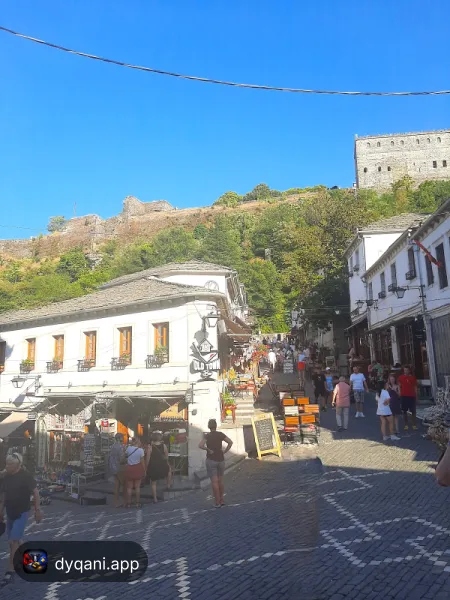
Gjirokastër — Another UNESCO gem, this "City of Stone" features dramatic Ottoman architecture, a massive hilltop castle, and connections to both Ismail Kadare (Albania's most famous author) and the former dictator Enver Hoxha, who was born here. About 4 hours south of Tirana.
Sarandë — A lively coastal city on the Ionian Sea, Sarandë is the main base for visiting Butrint and Ksamil. Its waterfront promenade is perfect for evening walks, and the city has excellent seafood restaurants. Just 30 minutes by ferry from Corfu, Greece.
Ksamil — Often called the "Albanian Maldives," Ksamil boasts turquoise waters and four small islands you can swim to. The beaches are stunning, though they can get crowded in July-August. Located 15 minutes south of Sarandë. See our best beaches guide for the complete coastal rundown.
Dhërmi & Himara — The heart of the Albanian Riviera. Dhërmi has a long sandy beach backed by mountains and growing nightlife. Himara is a charming town with a historic old town on the hill and family-friendly beaches below. Both are accessible via the stunning coastal road from Vlorë.
Vlorë — Albania's second-largest port city sits where the Adriatic and Ionian seas meet. It's historically significant as the city where Albanian independence was declared in 1912. Visit the Independence Museum and use Vlorë as a base for Riviera day trips.
Durrës — Just 30 minutes from Tirana, Durrës has Albania's largest Roman amphitheater and the country's most accessible beaches. Popular with locals, it offers a different vibe from the south.
Shkodër — Northern Albania's cultural capital, situated on the shores of Lake Shkodër (the largest lake in Southern Europe). Visit Rozafa Castle, the vibrant pedestrian street, and use it as a gateway to the Albanian Alps.
Theth & Valbona — The Albanian Alps (Accursed Mountains) offer some of Europe's most dramatic hiking. The Valbona-Theth trail is a 6-7 hour trek through stunning alpine scenery. Both villages have guesthouses with incredible hospitality. Best from June to October.
Korçë — Known as the "Little Paris of Albania," Korçë is famous for its café culture, the first Albanian-language school, excellent museums, and the Korçë Beer Festival in August. The surrounding region produces Albania's best wine.
Pogradec & Lake Ohrid — Lake Ohrid, shared with North Macedonia, is a UNESCO site and one of Europe's oldest and deepest lakes. Pogradec is a pleasant lakeside town with excellent Koran fish restaurants.
Apollonia — An ancient Greek and Roman city near Fier, Apollonia was once one of the most important cities in the Roman Republic. The ruins include a restored monastery and museum. A fascinating half-day trip from Tirana or Berat.
Butrint — Albania's most important archaeological site and a UNESCO World Heritage Site. This ancient city spans Greek, Roman, Byzantine, and Venetian periods. Set in a beautiful natural park near Sarandë, it's one of the Mediterranean's most impressive ancient sites.
Blue Eye Spring (Syri i Kaltër) — A mesmerizing natural spring where water gushes from a 50-meter depth, creating an intensely blue "eye." The water is a constant 12°C year-round. Located between Sarandë and Gjirokastër, it's an essential stop on any southern Albania itinerary.
Money & Budget
Albania uses the Albanian Lek (ALL) as its currency. The approximate exchange rate is 1 EUR ≈ 100 ALL (making mental math very easy). Key money facts:
- ATMs are widely available in all cities and tourist areas. Raiffeisen Bank and BKT ATMs are the most common.
- Card payments are increasingly accepted in hotels, restaurants, and shops in Tirana and tourist towns, but always carry cash for smaller establishments, furgons, and rural areas.
- Euros are often accepted in tourist areas, but you'll get a better rate paying in Lek.
Daily budget estimates:
- Backpacker: €25–35/day (hostel, street food, furgon transport)
- Mid-range: €50–80/day (3-star hotel, restaurant meals, occasional taxi)
- Luxury: €120+/day (boutique hotel, fine dining, car rental, guided tours)
Albania is one of Europe's most affordable countries. A full restaurant meal with drinks rarely exceeds €10–15 per person, even in Tirana.
Getting Around
- Rental Cars: The most flexible option for exploring Albania. Prices range from €20–30/day for a basic car. International driving license plus passport required. Drive on the right. Fuel costs approximately €1.50/L. Mountain roads can be narrow and unpaved in remote areas, but main highways are excellent after recent infrastructure improvements. Find rental cars on Dyqani's car rental page.
- Furgons (Shared Minibuses): Albania's unique public transport — shared minivans that depart when full. Extremely affordable (€2–5 for most routes) but no fixed schedule. Ask locals for departure points, usually near city centers. Our transport guide covers all options in detail.
- Intercity Buses: Regular services on major routes — Tirana-Sarandë (~6h, ~€10), Tirana-Berat (~2h, €5), Tirana-Shkodër (~2h, €5). Depart from various points in Tirana (no centralized bus station).
- Taxis & Ride-hailing: Use the InDriver or Rruga apps for fair pricing. Always agree on the price before getting in, or insist on the meter.
Albanian Culture & Etiquette
Albanians are among the most hospitable people in Europe. A few cultural notes will help you connect:
- Besa: The Albanian code of honor — a sacred promise. It's the reason Albania sheltered Jews during WWII (the only European country where the Jewish population grew during the war).
- Head gestures: This confuses every visitor — nodding your head means NO, and shaking your head means YES. It takes practice!
- Coffee culture: Coffee is a ritual. The default order in most cafés is an espresso macchiato. Expect to spend €0.60–1.00 for a coffee, and enjoy long conversations over it.
- Raki: Homemade grape brandy offered to every guest. It's considered rude to refuse at least a small sip. Many families distill their own. Explore more in our Albanian food guide.
- Family: Albanian culture is deeply family-centric. Expect questions about your family — it's a sign of genuine interest, not nosiness.
Safety
Albania is one of the safest countries in Europe for tourists. Crime rates are lower than in Italy, Greece, or Spain. Key safety facts:
- No "no-go" areas for tourists in any Albanian city.
- Violent crime against tourists is virtually unheard of.
- Common-sense precautions apply: watch your belongings in crowded areas, don't flash expensive jewelry.
- Road safety: Drive carefully on mountain roads, especially at night.
- Emergency number: 112 (works throughout Albania)
Useful Albanian Phrases
Albanians deeply appreciate any effort to speak their language. Here are 10 essential phrases:
- Faleminderit (fah-leh-meen-DEH-reet) — Thank you
- Mirëdita (meer-uh-DEE-tah) — Good day / Hello
- Tungjatjeta (toong-yah-TYEH-tah) — Hello (formal)
- Sa kushton? (sah koosh-TON) — How much does it cost?
- Ku është…? (koo UHSH-tuh) — Where is…?
- Gëzuar! (guh-ZWAR) — Cheers!
- Shëndet! (shuhn-DET) — To your health! (toast)
- Mirupafshim (meer-oo-paf-SHEEM) — Goodbye
- Po / Jo (poh / yoh) — Yes / No
- Ndihmë! (ndee-muh) — Help!
Money & Tipping in Albania
The official currency is the Albanian Lek (ALL), though euros are widely accepted in tourist areas and for larger purchases like hotels and car rentals. ATMs are plentiful in cities — look for Credins, BKT, or Raiffeisen Bank machines. Credit cards are accepted in mid-range restaurants, hotels, and supermarkets in Tirana, but cash is king in smaller towns, markets, and rural areas. Always carry some lek for taxis, furgons, and local eateries.
Exchange rates (as of 2026): €1 ≈ 100 ALL. You'll get better rates at exchange offices ("këmbim valutor") than at hotels. Avoid exchanging at the airport — rates are significantly worse. Street money changers exist but are best avoided.
Tipping is appreciated but not obligatory. In restaurants, rounding up the bill or leaving 5-10% is customary. For exceptional service, 10-15% is generous. Taxi drivers don't expect tips, but rounding up to the nearest 100 lek is a nice gesture. Tour guides and hotel staff appreciate €2-5 for good service. In coffee bars (where Albanians spend hours daily), tipping isn't expected but leaving small change is common.
Safety Tips for Solo Travelers
Albania is remarkably safe for solo travelers, including women traveling alone. Violent crime against tourists is extremely rare, and Albanians take pride in their tradition of hospitality (besa — a sworn oath of protection). That said, common-sense precautions apply:
- Petty theft: Keep valuables secure in crowded markets and on public transport. Pickpocketing exists in Tirana but is less common than in Western European capitals.
- Road safety: This is the biggest genuine risk. Albanian driving can be aggressive, roads in rural areas are challenging, and pedestrians should exercise extreme caution. Always look both ways — even on one-way streets.
- Wild dogs: Stray dogs are common throughout Albania. They're generally docile and well-fed by locals, but avoid approaching or feeding them, especially packs at night.
- Swimming: Some beaches lack lifeguards. Undertow can be strong at open Adriatic beaches like Durrës and Shëngjin. Stick to calmer Ionian beaches (Ksamil, Himara) if you're not a confident swimmer.
- Emergency numbers: Police: 129, Ambulance: 127, Fire: 128. The universal EU emergency number 112 also works.
- Solo female travelers: Albania is generally safe, though unwanted attention can occur in rural areas. Dress modestly when visiting mosques or remote villages. The diaspora community and tourism growth mean that solo female travelers are increasingly common and accepted. For city-based accommodation and safety tips, see our Tirana city guide.
📱 Explore with Dyqani
Download the free Dyqani app to access this guide offline. Our free offline maps cover all of Albania & Kosovo — no roaming charges needed.
🌍 Visiting Albania?
Vacation rentals, car hire, tours — all from verified locals.
Frequently Asked Questions
Is Albania safe for tourists?
Do I need a visa to visit Albania?
What is the best time to visit Albania?
What currency does Albania use?
How do I get around Albania?
How many days do I need in Albania?
Search listings now
Get the Best Deals
Sign up for exclusive deals, new properties, and travel guides for Albania & Kosovo.
No spam. Unsubscribe anytime.

Buy, sell and contact sellers directly from the app. Free for iPhone & Android.